Quebec City’s film and television production industry ( smaller than Montreal’s (the dominant hub of Quebec’s screen production economy, with approximately 75% of the province’s production activity) but of genuine creative significance as both a production location and a source of the artistic talent that feeds the provincial screen culture ) reflects the capital’s position in Quebec’s cultural economy: significant in institutional and heritage culture terms, secondary in the commercial entertainment industry terms that the Montreal-centred production economy defines. The provincial film and television tax credit (the crédit d’impôt remboursable pour production cinématographique ou télévisuelle) has been the primary policy tool driving Quebec’s production industry since the early 1990s; the credit’s parameters (covering 40-65% of eligible Quebec labour costs for qualifying productions) provide the economic foundation for a production industry that employs approximately 8,000-10,000 people province-wide, of whom several hundred to several thousand work on productions filmed or primarily produced in Quebec City.
Quebec City as Location
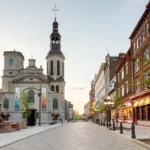
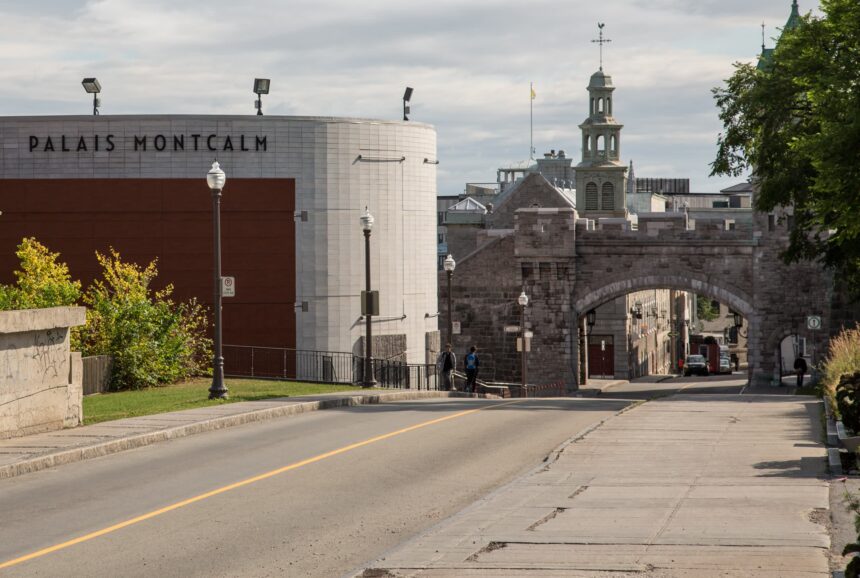
Quebec City’s heritage physical environment ( the Old City’s 17th and 18th-century streetscapes, the cliff-face topography, the fortification walls, and the winter landscape ) makes it one of the most versatile and visually distinctive film and television production locations in Canada. The city has served as the setting for both its own specifically Quebec stories and for period productions that require European or American historical environments that the Montreal suburban sprawl cannot provide. The heritage properties of the Old City (the Château Frontenac, Place Royale, the Rue du Petit-Champlain) appear in multiple Quebec productions; the winter landscape (the snowed-in heritage streets, the Carnaval environment, and the visual drama of the ice-covered St. Lawrence) has been the setting for the winter-Quebec films and series that constitute a recognisable genre in Quebec’s screen culture.
Notable Quebec City Productions
Productions associated with Quebec City: the series 19-2 (the bilingual police drama whose Quebec City police culture context provided the institutional setting), Unité 9 (the women’s prison drama filmed partially at locations accessible from Quebec City), the film Les Invasions Barbares (2003, Denys Arcand’s Palme d’Or-winning film whose Quebec City healthcare setting and the specific cultural politics of the Quiet Revolution generation’s aging provide the most artistically complete representation of the capital’s institutional culture in Quebec cinema), and the various documentary productions about Quebec City’s heritage (the documentary film culture that the city’s history generates in the French-language public broadcasting system). The MusiquePlus and Artv programming that occasionally uses Quebec City locations represents the television production end of the city’s screen culture presence.
The Production Ecosystem
Quebec City’s screen production ecosystem ( the production companies, service providers, talent agencies, and the technical crew pool that constitutes the production industry’s infrastructure in the capital ) is anchored by a small number of production companies (primarily television-focused, serving the provincial broadcast market through the Radio-Canada and TVA networks that are the primary buyers of Quebec City-produced content) and by the service infrastructure (equipment rental, post-production facilities, location services) that serves both local productions and the Montreal-based productions that choose Quebec City locations for specific projects. The Institut national de l’image et du son (INIS) ( the national screen arts school whose Quebec City campus complements the Montreal main campus ) trains the next generation of Quebec screen producers, directors, and writers; several INIS alumni have returned to Quebec City to build production careers that leverage the city’s unique cultural and physical assets.