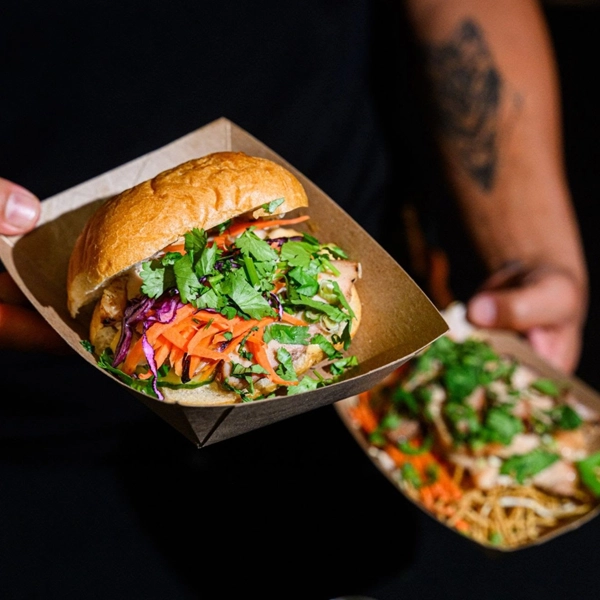
Québec’s contemporary kitchen has a clearer identity than it did a decade ago. The French-provincial-technique-on-local-product template that defined the 2000s has given way to something more specific: a younger generation of cooks who trained in Montréal, Copenhagen, Melbourne, and New York, returned to Québec City, and opened small rooms that cook from regional ingredients without announcing the fact. This is the cohort that has shaped what gastronomie québécoise means in 2026.
The anchors of the new scene
Arvi, on 3e Avenue in Limoilou, is the restaurant most often cited by the city’s serious cooks as the benchmark. Chef Julien Masia runs a fifteen-seat tasting counter, eight to ten courses at a fixed price, ingredients sourced aggressively from Québec producers but assembled with Scandinavian and Japanese influences. The booking policy (online, seats disappear within hours) has become its own subculture.
Battuto, in Saint-Sacrement, is the Italian-leaning counterpart. Chef Guillaume St-Pierre’s pasta programme runs on regional wheat and flours; the vegetables are the hero courses as often as the pastas. Battuto opened in 2015 and has been consistent longer than any comparable room in the city.
Kirin, Arvi’s Japanese sibling next door, opened more recently and runs a smaller kaiseki-adjacent programme that draws on Québec seafood and produce.
The boreal-cuisine generation
Chez Boulay, on Rue Saint-Jean, remains the reference point for the boreal-cuisine project: northern Québec ingredients (cold-climate game, foraged plants, preserved elements, sea-buckthorn, fiddleheads, labrador tea) cooked in a European-classical register. Chef Jean-Luc Boulay’s programme is the older version of the regional-cuisine argument that Arvi and Battuto make in newer forms.
Légende, on the Côte de la Fabrique, cooks in the same register and sources from a similar producer network. Coteau, inside the Auberge Saint-Antoine in the Vieux-Port, handles the more ambitious hotel version of the same brief.
The bistros and their kitchens
Le Clocher Penché, on Rue Saint-Joseph, has anchored Saint-Roch dining since 2001 and continues to cook market ingredients in a straightforward register. The wine list leans natural; the kitchen is steady rather than flashy. It is the first restaurant I send visitors to for a weekend brunch.
Bistro B, on Cartier, and Le Renard et la Chouette, in Saint-Roch, round out the mid-tier bistro set that handles the volume of the city’s neighbourhood dining. None are avant-garde; all three are reliable.
The producer network
What makes the current generation coherent is the producer network that supports it. Ferme Sanders on the Côte-de-Beaupré (vegetables and grains), Fromagerie du Troupeau Bénit (raw-milk cheese from Charlevoix), Fumet du Saint-Laurent (smoked and cured river fish), Canards du Lac Brome (ducks and geese from the Townships), Ferme Jacques et Diane on Île d’Orléans (stone fruits, soft fruits).
These names appear on menus across the city’s serious rooms. Five years ago, only a handful of restaurants sourced from them directly. The supply network has caught up with the demand.
Natural wine and the SAQ workaround
The provincial alcohol monopoly (SAQ) has slowly expanded its natural-wine section, but the real growth has happened through private importers who supply restaurants directly. Le Moine Échanson, Battuto, and Le Clocher Penché all carry lists that would have been impossible to build through the SAQ alone.
The drinking side of the new cuisine has changed as much as the cooking side; this is an under-reported piece of the story.
Pastry and bakery
Paillard, the bakery and café in the Vieux-Port, is the baseline for good bread in the city. Niska, a smaller artisan bakery in Saint-Roch that opened in 2022, is where the serious bread is now. Borealis Bakery, on Rue Saint-Jean, focuses on viennoiserie.
The pastry scene has grown alongside the restaurant scene; it is easier to find a good croissant in Québec City in 2026 than it was in 2019.
What to book
The short list, in order of difficulty: Arvi (hardest), Battuto (a month out), Kirin (easier), Le Clocher Penché for brunch (weekends require reservations, weekdays walk-in), Chez Boulay or Légende for a serious Vieux-Québec dinner.
If you are in the city for one night, book Battuto. If you are in for three, layer Arvi, Le Clocher Penché, and one boreal-cuisine room. If you are in for a week, the neighbourhood bistros and Limoilou’s emerging rooms fill the rest.
What the new cuisine is not
It is not foam-and-tweezer cuisine. The avant-garde moment of the 2010s has passed; the current rooms run plates that look recognisable even when the ingredient list does not.
It is not expensive by fine-dining standards. Tasting menus in Québec City run 140 to 220 dollars with wine pairing; comparable rooms in Montréal or Toronto run twenty to forty percent higher. The value proposition, for a visitor who cares about cooking, is genuine.