Quebec City’s French-language hip-hop and urban music scene ( smaller than Montreal’s internationally recognised francophone hip-hop cluster, but culturally distinct and artistically vital ) has produced a remarkable series of artists whose work reflects the specific social, linguistic, and geographical character of the capital. The combination of Quebec City’s francophone cultural density (a city that is 95%+ French-language, without Montreal’s bilingual code-switching), its working-class neighbourhood culture (Saint-Roch, Limoilou, Saint-Sauveur), and its strong oral traditions (joual vernacular, chanson poetry) has created conditions in which French-language hip-hop developed its own regional flavour distinct from Montreal’s scene.
Alaclair Ensemble: The Collective That Defined Quebec City Hip-Hop
Alaclair Ensemble ( the collective formed in Quebec City in the late 2000s, comprising rappers including Oglo, Eman, Robert Nelson, Yes McCan, KenLo Craqnuques, and others ) is the most critically and commercially successful hip-hop act to emerge from Quebec City, and the group most responsible for establishing the city’s hip-hop community’s national visibility. Their debut album “Les Frères Cueilleurs” (2011) and subsequent releases were praised for their inventive use of joual vernacular, their self-aware Quebec cultural references, and their production aesthetic that drew on boom-bap tradition while incorporating distinctively Quebec sonic elements. The collective’s albums remain foundational texts for Quebec City’s hip-hop community.
The Scene Today
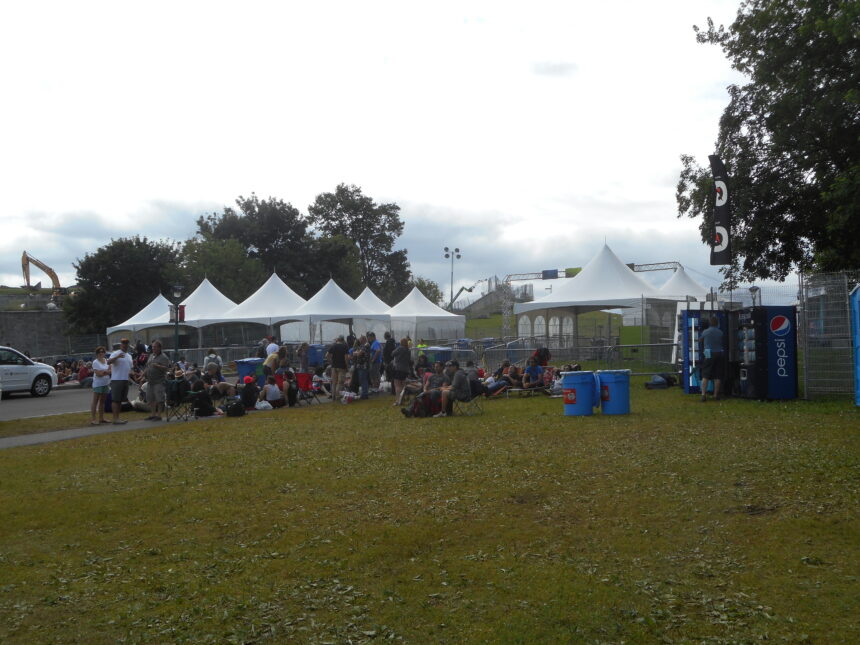
The contemporary Quebec City hip-hop and urban music scene is concentrated in the Saint-Roch neighbourhood’s clubs and performance spaces ( the same creative economy ecosystem that Ubisoft’s presence helped develop provides the social infrastructure for emerging artists. Several venues in Saint-Roch and the adjacent Lower Town regularly program hip-hop, R&B, and urban music events; the Festival d’été de Québec includes urban music acts on its smaller stages alongside its major international headliners. The scene’s connection to the broader Quebec francophone hip-hop world ) through Montreal industry connections and the Radio-Canada music platform ensures that Quebec City artists have distribution channels beyond the local market. The Francouvertes national competition for emerging francophone artists has provided Quebec City hip-hop and urban artists with visibility in recent editions.
The Chanson Connection
Quebec City’s urban music scene exists in productive tension with the city’s stronger chanson tradition ( the singer-songwriter culture represented by artists including Tire le Coyote, Louis-Jean Cormier, and the long legacy of Robert Charlebois, who has been resident in the region. The cross-pollination between hip-hop’s verbal virtuosity and chanson’s poetic tradition is particularly evident in Quebec City artists whose work draws on both ) the joual vernacular that both traditions share, the storytelling emphasis that Quebec’s oral culture prizes, and the political-cultural consciousness that both traditions have historically expressed. This distinctive fusion ( French hip-hop inflected by the chanson tradition and the specific social geography of Quebec City ) is the most culturally particular contribution of the city’s urban music scene to the broader Quebec cultural conversation.