Québec City’s winter runs long enough to reshape daily life. From early December to mid-April, outdoor temperatures stay below freezing most days and below minus fifteen frequently. Residents do not stop living; they shift their lives indoors. The resulting infrastructure, a network of libraries, pools, climate-controlled atria, community centres and connecting tunnels, amounts to what locals sometimes call the hivernacle, a term borrowed from the Catalan word for winter garden and used here more broadly for the city’s collective indoor survival strategy.
Public libraries
The Ville de Québec operates 26 municipal libraries, more per capita than any other major Canadian city. Usage spikes in winter. The Bibliothèque Gabrielle-Roy in Saint-Roch, renovated between 2020 and 2023, is the flagship: five floors, 2,800 square metres of reading space, a large children’s section, and programmed activities including story hours, language exchanges and film screenings. Daily attendance during winter frequently exceeds 1,500.
Branch libraries in neighbourhoods from Cap-Rouge to Beauport serve as community living rooms through the cold months. Residents work from reading tables, parents bring children for the morning story hour, retirees read newspapers and play chess. The libraries remain open 70 hours a week including Saturdays and Sundays; most close only for major holidays.
Public pools and arenas
The city runs eight public indoor swimming pools and over twenty municipal arenas. Pool traffic runs highest in winter when outdoor alternatives disappear. The PEPS at Université Laval, the Complexe sportif Chauveau in Charlesbourg, and the Piscine municipale de Sainte-Foy are the larger facilities; neighbourhood pools serve their immediate catchments. Admission runs C$5 to C$8 per visit, less for residents with city cards.
Arenas operate on a more complex schedule. Public skating sessions, league hockey, figure skating and learn-to-skate programmes fill most slots. Most arenas accept drop-in skating at specific hours; booking ahead through the city’s recreation portal avoids showing up to find the ice booked.
The atria
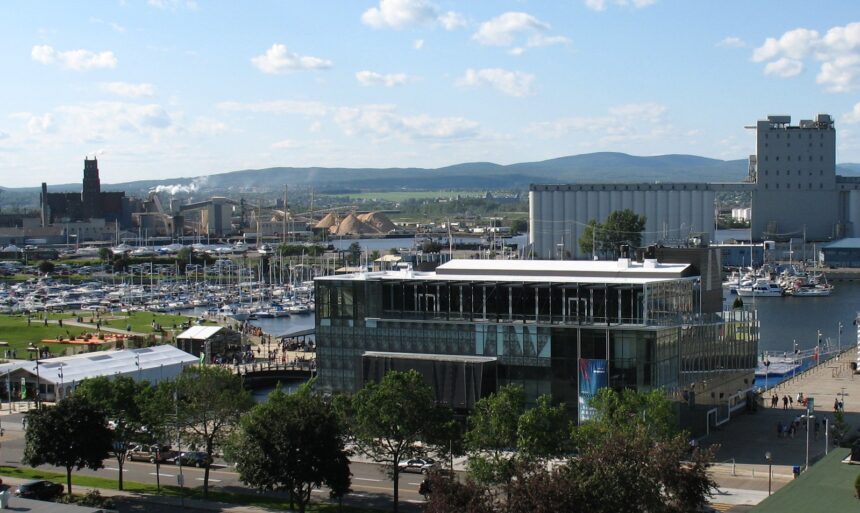
A handful of large glass-enclosed atria across the city provide daylit indoor public space through the winter. The Musée national des beaux-arts du Québec’s Lassonde Pavilion, the Université Laval central walkway linking three major academic buildings, the Grand Théâtre’s renovated lobby, and the atrium at the Bibliothèque Gabrielle-Roy all offer climate-controlled spaces where visitors can sit, read or work with daylight and open views.
These spaces matter more than their architectural function might suggest. Winter depression, driven partly by short daylight hours, responds measurably to exposure to natural light. Québec City’s atria give residents an accessible way to get that exposure without braving the cold.
The tunnel system
Québec City’s underground connections are less extensive than Montréal’s RÉSO but cover more than expected. Place Québec, the Hilton Québec hotel, the Delta Québec, the Édifice Marie-Guyart and the Édifice Jean-Antoine-Panet (housing the National Assembly) connect via underground and enclosed walkways. The system allows pedestrian movement between several major office buildings, two major hotels, and the National Assembly without exposure to outdoor weather.
In Sainte-Foy, the Laurier Québec and Place Sainte-Foy shopping centres include their own climate-controlled walkways connecting to adjacent office buildings and hotels. The combined indoor footprint allows a full day of business and shopping on a minus-twenty day without stepping outside.
Community centres and patros
The patro tradition, a Québec variant of the parish community centre originally run by religious orders, has evolved into a network of large neighbourhood-level community facilities. The Patro Roc-Amadour in Limoilou, the Patro Laval in Sainte-Foy and several others offer sports programming, youth activities, meal services and social events. Membership costs are modest, typically under C$100 a year for an individual.
The patros’ winter programming tends to be the most active part of their calendar. Table tennis clubs, badminton leagues, adult education classes, meal services for isolated seniors, and children’s holiday programmes fill the December-to-March months. For newcomers to the city, particularly immigrants, the patros have long served as entry points into neighbourhood social life.
Why it matters
The hivernacle is not glamorous infrastructure. No tourist comes to Québec City to admire a municipal swimming pool or a branch library. But the network, taken together, is what allows the city to maintain a high quality of life through a climate that would otherwise drive most residents to migrate. Visitors curious about how a city of 800,000 actually functions through five months of winter can do worse than to spend an afternoon in one of the larger public libraries or community centres watching people live their indoor lives.