



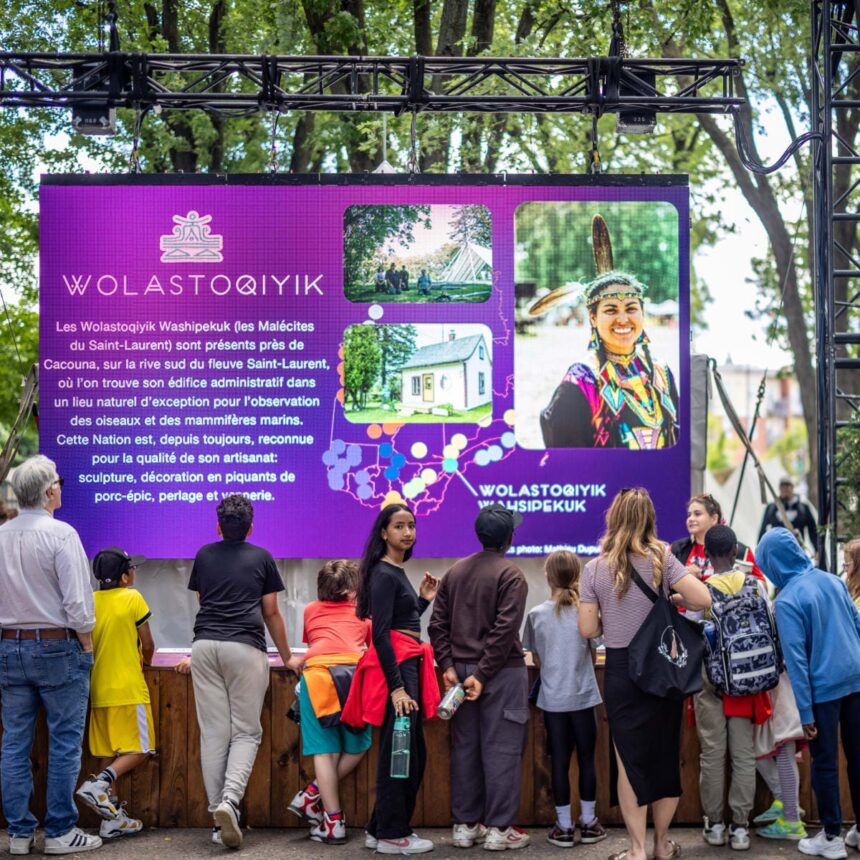
The Huron-Wendat Nation at Wendake is the most visible Indigenous presence in the Quebec City region a living community of approximately 4,000 members with full political, cultural, and economic institutions, accessible to visitors through the Hôtel-Musée Premières Nations and the cultural tourism infrastructure of Wendake. But Quebec City’s Indigenous heritage extends beyond the Wendat: the site was contested and shared among multiple nations before, during, and after the period of French colonisation, and the archaeological record of pre-contact occupation reveals layers of human presence going back thousands of years before Cartier’s 1534 arrival.
Stadacona & Pre-Contact History
The Iroquoian settlement of Stadacona ( the village that Cartier encountered in 1534 at the site of present-day Quebec City, inhabited by a people whom historians now identify as St. Lawrence Iroquoians distinct from both the Wendat and the Haudenosaunee Confederacy ) disappeared from the historical record by Champlain’s arrival in 1608. The fate of the Stadaconans ( absorbed, displaced, or eliminated by inter-tribal conflict during the 16th century ) remains one of the most debated questions in northeastern North American archaeology. The Musée de la Civilisation’s permanent exhibition “Nous, les Premières Nations” presents this history with the most scholarly rigour available to the general public in Quebec City.
Abenaki & Innu Connections
The Abenaki peoples of the St. Lawrence and Connecticut River valleys ( including the communities of Odanak and Wôlinak south of Quebec City ) maintained trading and political relationships with New France throughout the colonial period, and their presence in the greater Quebec City region is documented in the Jesuit Relations and other colonial sources. The Innu (Montagnais) of the North Shore and Saguenay region traveled to Quebec City for trade throughout the French and English regimes; their descendants continue to maintain political relationships with provincial and federal governments in Quebec City on resource and land rights issues.
Archaeological Heritage in the City
Archaeological excavations in Quebec City ( conducted systematically since the 1970s in conjunction with construction and restoration work in the historic core ) have revealed pre-contact artifacts including lithics, ceramics, and food remains that demonstrate human occupation of the site going back several thousand years before European contact. The Musée de la Civilisation’s archaeological reserves and the City of Quebec’s archaeological service maintain this material; several excavation sites are visible within the city’s heritage buildings and public spaces. The TramCité preparatory excavations along Boulevard René-Lévesque and 1re Avenue in 2025-2026 have produced additional archaeological discoveries that are being documented before construction proceeds.
Wendake is fifteen minutes from downtown and features in our guide to day trips from Québec City.








