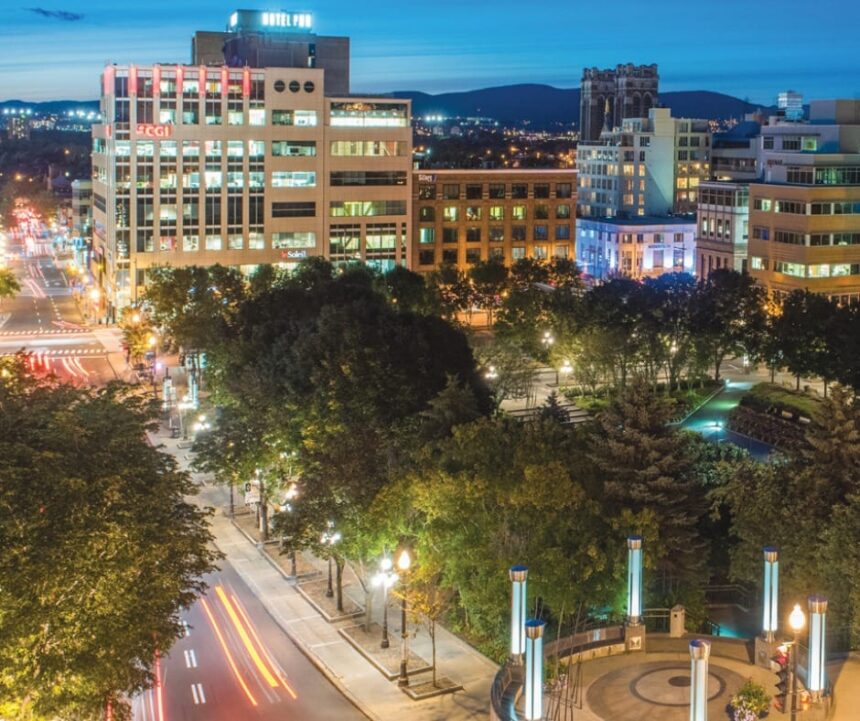
Quebec City’s residential geography is more nuanced than the Old City / everything-else distinction that visitors perceive. For anyone considering living in the city ( as a student, professional, family, or retiree ) understanding the distinct characters, price points, and daily life of the different neighbourhoods is essential to making a well-matched choice.
Saint-Roch: The Creative District
Saint-Roch ( the former industrial district that regenerated from the 1990s through investment in arts infrastructure, Université Laval satellite facilities, and organic commercial development ) is the city’s most dynamic neighbourhood for young professionals. The Rue Saint-Joseph commercial strip, the Méduse cultural cooperative, and the density of cafés, wine bars, and restaurants make it the most culturally activated neighbourhood outside the tourist zone. Rents are higher than Limoilou but lower than Montcalm; the rental market is competitive for quality units. TramCité will place a major hub (Pôle Saint-Roch) directly in the neighbourhood.
Limoilou: Affordable & Authentic
Limoilou ( the working-class grid neighbourhood east of the Saint-Charles River ) has gentrified significantly since 2010 but retains the most authentic neighbourhood character of any inner Quebec City district. The 3e Avenue and Cartier commercial strips serve a mixed population of long-term residents, young families, and newcomers. Rents are among the most affordable in the inner city; duplex housing on exterior-staircase streets is the dominant typology. The neighbourhood is walkable, flat (unlike the Old City), and increasingly well-served by cycling infrastructure.
Montcalm: The Established Professional Quarter
Montcalm ( bounded by the Plains of Abraham, the Grande Allée, and the Rue Saint-Jean commercial strip ) is the established professional residential neighbourhood, with a mix of Victorian duplexes, converted apartments, and the highest concentration of established restaurants in the city. Avenue Cartier serves as the neighbourhood’s main commercial street; Grande Allée is its animated summer terrace boulevard. Property prices are among the highest in the inner city; rents reflect both location quality and the neighbourhood’s proximity to the National Assembly government district.
Sainte-Foy: The Suburban Professional Hub
Sainte-Foy ( the western borough encompassing Université Laval’s campus, the Boulevard Laurier commercial corridor, and the Galeries de la Capitale shopping complex ) is the city’s primary suburban professional hub. The concentration of insurance companies (iA Financial Group), government offices, and university-adjacent businesses creates a stable employment and rental market. Housing options include everything from student apartments near the campus to detached family homes in the residential streets west of Chemin Sainte-Foy. The Boulevard Laurier TramCité corridor will significantly improve transit connectivity for this previously transit-poor area.