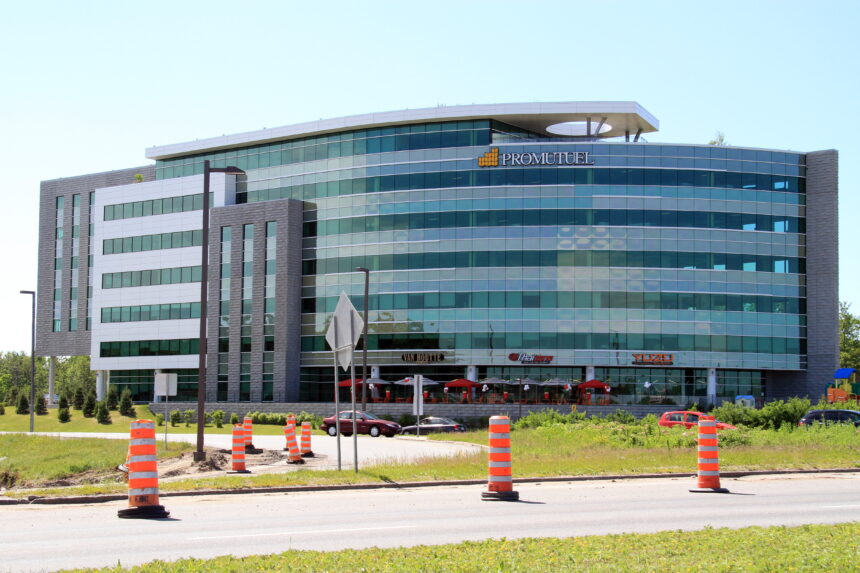
Lebourgneuf ( the commercial and residential district in the Les Rivières arrondissement centred on the Boulevard Lebourgneuf and the Place Lebourgneuf shopping centre, housing approximately 40,000 residents in the surrounding residential streets and serving as the primary commercial hub for the northern arrondissements’ suburban population ) is one of Quebec City’s most functionally successful but least architecturally celebrated commercial zones. The combination of the Place Lebourgneuf shopping centre (approximately 80,000 square metres of retail space, anchored by IGA, Canadian Tire, and the standard Canadian chain retail mix), the surrounding commercial strip development (big-box retailers, automotive dealerships, restaurant chains, and the service businesses that suburban commercial strips attract), and the extensive surface parking that the automobile-dependent commercial format requires creates a commercial landscape of maximum practical efficiency and minimum architectural quality the defining condition of post-war North American commercial development.
Place Lebourgneuf Shopping Centre
The Place Lebourgneuf shopping centre ( the primary enclosed mall in the northern arrondissements, opened in 1992 and expanded through the 2000s ) provides the full range of everyday and fashion retail for the Charlesbourg, Les Rivières, and La Haute-Saint-Charles arrondissements. The mall’s commercial mix includes: food and beverage (the food court, the IGA anchor grocery, and the restaurant chains at the mall perimeter), everyday retail (drugstore, bank branches, and the service retail that shopping malls cluster for convenience), fashion (the standard Canadian chain fashion retailers in the mid-price bracket that the suburban demographic demands), and the specialty retail (electronics, sporting goods, and hobby stores) that the residential communities’ consumer demand supports. The Place Lebourgneuf’s commercial performance has been relatively resilient compared to some comparable Canadian malls the captured suburban market and the absence of competing mall infrastructure in the northern arrondissements sustain occupancy rates that indoor malls in more competitive retail environments cannot match.
The Aréna de Lebourgneuf
The Aréna de Lebourgneuf ( the primary community ice arena serving the northern Les Rivières arrondissement, located adjacent to the Place Lebourgneuf commercial zone ) provides the ice surface that sustains the hockey and figure skating programs of the surrounding residential communities. Community arenas in Quebec City’s outer arrondissements serve the same social function that the local parish church served in an earlier generation: the community gathering point around which recreational activity, youth sports programs, and the specific social bonds that arise from shared athletic experience are built. The Aréna de Lebourgneuf’s programming (community hockey leagues, figure skating clubs, public skating sessions, and the school ice time that the CSCAP board books for physical education) reflects the full range of community ice use that sustains Quebec City’s hockey culture in the arrondissements beyond the inner-city’s proximity to the Centre Vidéotron.
Residential Character
The residential streets of the Lebourgneuf community ( the bungalows, semi-detached homes, and low-rise apartment buildings that house the 40,000+ residents of the quartier ) maintain the domestic suburban character that the post-war residential expansion established. The community’s social infrastructure (the neighbourhood schools, the local parish community centre, and the recreational centre programming that the Ville de Québec provides through the arrondissement’s facilities network) supports the daily social life of a suburban residential community without the neighbourhood commercial street vitality that the inner-city quartiers’ Rue Saint-Jean or 3e Avenue Limoilou equivalents provide. The community’s primary daily commercial interaction is with the Place Lebourgneuf commercial zone or the Boulevard Henri-Bourassa commercial corridor rather than with a neighbourhood main street a pattern typical of post-war North American suburban development that the TramCité’s future transit service may partially modify.