On a Sunday morning in February, in temperatures that typically sit around -10°C to -20°C, about a dozen teams of five people each line up on the shore of the St. Lawrence River in Québec City. Each team has a hand-built canoe — a specialized craft designed for the specific conditions of a river that’s partly frozen, partly flowing, and covered with broken ice floes of various sizes.
They will race those canoes across the river to Lévis and back — a round trip of about 3.5 kilometres, through conditions that would be considered unsafe in any other circumstance. When the ice is solid enough, they pull the canoes across it. When the water is open, they paddle. When they hit ice floes, they climb onto them, push the canoe across, climb back in, and keep going.
This is the Course de Canots à Glace — the ice canoe race — and it’s one of the most extraordinary winter sports in the world. If you’re in Québec City during Carnival, this is one of the events you don’t want to miss.
The Historical Context
Ice canoeing isn’t an invention of the modern Carnival. It’s a genuine traditional practice with roots stretching back to the 1600s. Before bridges were built across the St. Lawrence, ice canoes were the only practical way to cross the river in winter — for mail, supplies, passengers, and commerce.
The crews used specialized craft that could be paddled in open water and dragged over ice. Experienced rivermen knew how to read the ice conditions, manage the currents, and make the crossing safely. It was serious, dangerous work that formed an important part of Québec’s winter economy and culture for over 200 years.
The modern race, revived as a competitive sport in the 20th century, preserves the technique while removing the commercial necessity. Contemporary ice canoe crews still build canoes using traditional methods, train in traditional skills, and make the same crossings their ancestors made — except now for sport and tradition rather than transportation.
What the Race Actually Involves
Each team consists of five rowers, typically in extensive protective gear. The canoe itself is a hybrid craft — longer and more stable than a traditional canoe, with reinforced hulls designed to absorb impacts with ice.
The race starts from the Quai Chouinard pier on the Québec side of the river. The course:
- Cross the river to Lévis (roughly 1.75 km)
- Turn around at the designated buoy on the Lévis side
- Cross back to Québec
The crossing takes anywhere from 25 to 60 minutes depending on conditions. Ice coverage, current, wind, and team skill all factor in.
Multiple races happen throughout the Carnaval period — elite-level competitions with professional teams, plus various amateur divisions.
Watching the Race
Where to Watch
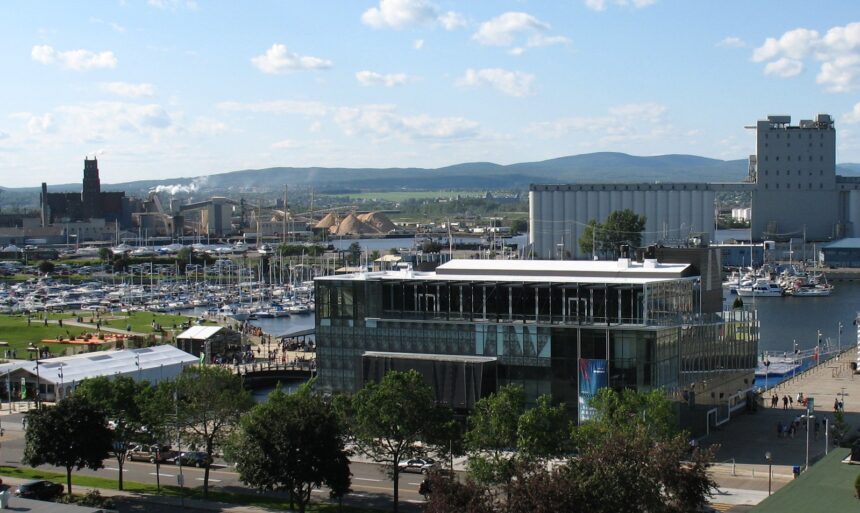
The Quai Chouinard pier in the Old Port is the official start and finish. Best view of the beginning (spectacular — teams launching, canoes hitting water and ice) and the finish (exhausted teams coming in hard).
The Dufferin Terrace gives elevated views of the crossings. You can see the teams maneuvering on the ice from about 75 metres above.
The Lévis side offers the turning-point view. Take the ferry across before the race starts.
The ferry itself sometimes gets unique mid-river views if the race coincides with ferry operations (though the ferry doesn’t interfere with the race).
What to Bring
- Maximum warm clothing. You’ll stand still for 90+ minutes.
- Binoculars — the crossings happen over open water, and good optics help you follow the action.
- Camera with telephoto capability — the craft are small relative to the river scale.
- Hot drink — bring a thermos.
- Hand warmers — multiple pairs.
Timing
Races typically happen on the middle Sunday of Carnival, but check the current festival schedule. Start times are usually announced 30 minutes before the first heat. Arrive 45-60 minutes early for good positioning.
The Skills On Display
If you watch closely, you’ll see several distinct techniques:
Paddling in open water — standard canoeing but adapted for the specialized craft.
Pushing and pulling on solid ice — teams use specially designed poles to propel themselves across.
Managing ice floes — teams have to read which floes will support weight and which won’t. Getting this wrong means crashing through and potentially losing the race.
Rotating teammates — crews switch positions mid-race to manage fatigue and different conditions.
Boat handling in current — the river’s flow adds significant complication to what looks like a straight-line crossing.
The Racers
Teams come from both Québec and international locations. Elite-level teams include:
- Québec-based teams (mostly from Québec City and surrounding regions)
- Ontario teams
- Occasional international teams (France, United States, Nordic countries)
Teams train year-round — mostly in summer on open water, and in winter on rivers with ice conditions. It’s a genuine sport with serious competitive traditions.
Why This Matters
The ice canoe race isn’t just entertainment. It’s the continuity of a practical skill that was essential to Québec life for centuries and has been preserved through the transition from utility to sport.
The crews who race are practicing techniques their ancestors used. The canoes they paddle are built using traditional construction methods. The route they cross is the same route mail carriers and supply runs took 200 years ago.
Watching the race means watching living history — not a costumed reenactment, but actual continuation of Québécois winter tradition.
Related Events
Ice canoeing competitions happen at other points in the Québec winter calendar, not just during Carnival:
- Coupe des Glaces — various competitions through winter season
- Regional championships — throughout Quebec, particularly along the St. Lawrence and Saguenay rivers
The Carnival race is the highest-profile event but not the only one.
Practical Tips
Getting to Quai Chouinard: 10-15 minute walk from most Old Québec accommodations. Parking limited; walk or take a cab.
Restrooms: At the port facilities and nearby restaurants.
Food: Seasonal kiosks at the port during race days. Better to eat before or after.
Weather plans: Race may be rescheduled in extreme conditions. Check day-of.
Combining with other activities: Race finishes leave you in the Lower Town with the rest of the afternoon free. Visit the Musée de la Civilisation or have lunch in Petit-Champlain.
FAQ
Is the race held every year?
Yes, as a central Carnival event.
Can visitors participate?
Not in the elite race. Some amateur divisions occasionally accept new teams with appropriate training. Not a first-visit activity.
How dangerous is it?
The conditions are dangerous; the teams are prepared. Serious injuries are rare. Spectators are completely safe.
Are there grandstands?
Limited seating at Quai Chouinard. Most watching is standing.
What if the weather is terrible?
Race decisions are made close to start time. Check official Carnival communications.
Final Word
The ice canoe race is the single most distinctively Québécois winter event you can watch. It’s impressive athletically, historically significant, and visually striking in ways that photos can’t fully capture. If you’re in Québec City during Carnival, set aside the morning for this. Stand on the pier, watch the teams launch, follow them across the river, and cheer them home. You’ll understand something about Québec winter that no other experience quite communicates.