Quebec City’s French-language public school system ( managed by the Commission scolaire de la Capitale (CSC), recently renamed the Centre de services scolaires de la Capitale under the 2019 school governance reform that eliminated school board elections in favour of a parent-council governance model ) serves approximately 35,000 students across Quebec City’s La Cité-Limoilou, Charlesbourg, Les Rivières, and La Haute-Saint-Charles arrondissements. The western arrondissements (Sainte-Foy–Sillery–Cap-Rouge, Beauport) are served by the Commission scolaire des Découvreurs and the Commission scolaire des Premières-Seigneuries respectively. The English-language public system is managed by the Central Québec School Board (CQSB).
School Geography by Arrondissement
Each of Quebec City’s arrondissements contains a network of elementary schools (écoles primaires, for students ages 5-12) and secondary schools (écoles secondaires, ages 12-17) distributed across the quartiers to serve the resident population within reasonable walking or transit distance. The inner arrondissements (La Cité-Limoilou, Charlesbourg) have older, denser school networks reflecting longer-established residential populations; the outer arrondissements have newer schools built to serve the post-war suburban expansion. Elementary schools in Quebec City are typically 300-600 students; secondary schools are larger, often 800-1,500 students, and serve multiple feeder elementary schools.
Notable Secondary Schools
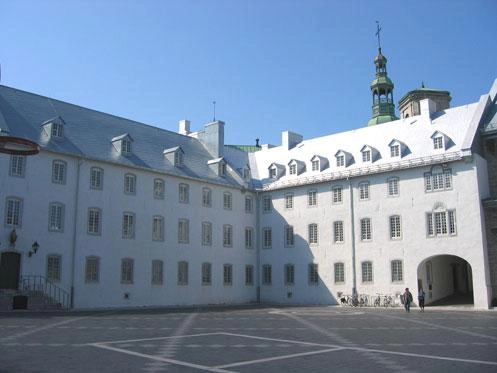
Several Quebec City secondary schools have developed distinctive reputations: the École secondaire de Rochebelle in Sainte-Foy is known for its International Baccalaureate and enriched programs; the École secondaire Limoilou in the Vieux-Limoilou quartier serves the neighbourhood’s diverse population with strong community engagement programming; the Séminaire de Québec (private secondary school on the Colline Parlementaire, founded 1663 as part of Bishop Laval’s educational mission) is the most historically significant secondary institution in the city. The private secondary schools ( le Collège des Jésuites, the Séminaire, and others ) charge annual tuition and admit students by academic achievement, operating alongside the free public system.
The 2019 Governance Reform
The CAQ government’s 2019 law abolishing school board elections ( replacing the elected school board trustees with parent-council governance and professional management by appointed school service centres ) was among the most controversial education reforms of the Legault government’s first mandate. Critics argued it reduced democratic accountability for the public school system; supporters argued that the low voter turnout in school board elections (often below 10%) demonstrated that the elected boards lacked meaningful democratic legitimacy. The transition to the Centre de services scolaires model has been administratively significant but has produced less operational change than either supporters or critics predicted in the immediate post-reform period.