Quebec City’s music scene (extending well beyond the Festival d’été de Québec’s internationally celebrated summer programming to encompass year-round jazz, contemporary classical, folk, and independent music cultures that serve the city’s population of music consumers) is more diverse and more active than the city’s tourism-oriented cultural identity suggests. The Orchestre symphonique de Québec’s classical programming anchors one end of the spectrum; the Saint-Roch neighbourhood’s indie rock and electronic music venues anchor the other. In between: a jazz tradition that has produced several significant Quebec City-born and Quebec City-based artists, a contemporary classical scene supported by the OSQ’s new music programming and the MNBAQ’s concert series, and the singer-songwriter culture that the Festival d’été’s French-language stages provide the most visible platform for.
The Jazz Tradition
Quebec City’s jazz tradition (less internationally celebrated than Montreal’s (whose Festival International de Jazz is one of the world’s largest) but genuine in its local vitality) includes several venue-based jazz programming series (the CKRL community radio’s jazz programming, the occasional jazz series at the Grand Théâtre, and the bar and café programming that several Montcalm and Saint-Jean-Baptiste establishments maintain), and the annual jazz programming within the Festival d’été’s secondary stage schedule. Quebec City jazz musicians (a community that is smaller than Montreal’s but maintains professional quality in the city’s performing and teaching musicians) are most visible through the Université Laval music faculty’s jazz program (which trains the successive generation of Quebec City jazz performers and educators) and through the independent concert series that the community organises in partnership with the city’s cultural centres.
Contemporary & Indie Music
The contemporary and independent music scene (the Quebec City bands and artists who are building careers in the indie rock, folk, and electronic genres) is centred on the Saint-Roch neighbourhood’s performance venues (Le Cercle’s basement performance space is the primary incubator for emerging Quebec City talent), the Méduse cultural cooperative’s programming (which includes music alongside the visual arts and performance disciplines that Méduse’s member organisations represent), and the DIY concert culture that the city’s creative community organises through social media and the community event platforms. Quebec City’s smaller scale relative to Montreal (which is both a limitation (smaller audiences, fewer venues, lower name recognition in the national music media) and an advantage (lower cost of living, more accessible studio time, stronger community bonds among practitioners)) produces a music culture that is more intimate and more community-oriented than Montreal’s but less commercially visible.
The Festival d’été’s Music Discovery Function
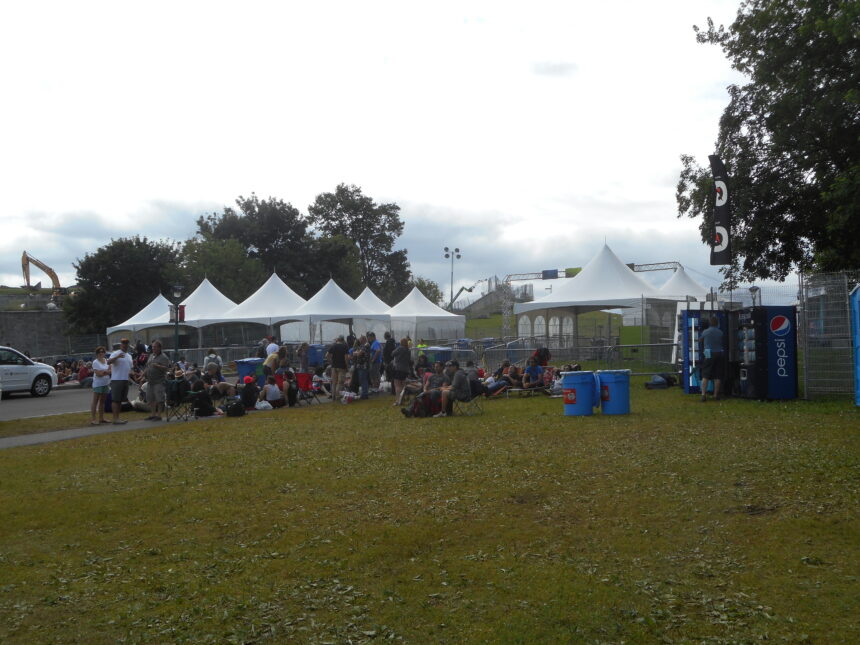
The Festival d’été de Québec’s programming function as a music discovery platform (the mechanism by which Quebec City audiences are exposed to international artists they might not encounter in the city’s year-round programming) has made the FEQ the primary vehicle through which Quebec City’s music culture engages with the global pop and rock mainstream. The FEQ’s secondary stages (the Scène Loto-Québec, the Scène Bell, and the Scène Hydro-Québec) provide more intimate programming than the Grande Scène des Plaines’s 85,000-capacity format, and it is on these stages that the most musically interesting FEQ programming often occurs: the international artists in the 2,000-8,000 audience format who are at a career moment where the intimacy of a festival secondary stage is more artistically appropriate than a massive stadium setting. The FEQ’s relationship with Quebec City’s year-round music community (providing income for local production companies, sound engineers, and concert promotion organisations) sustains a professional music infrastructure that the year-round scene alone could not maintain.