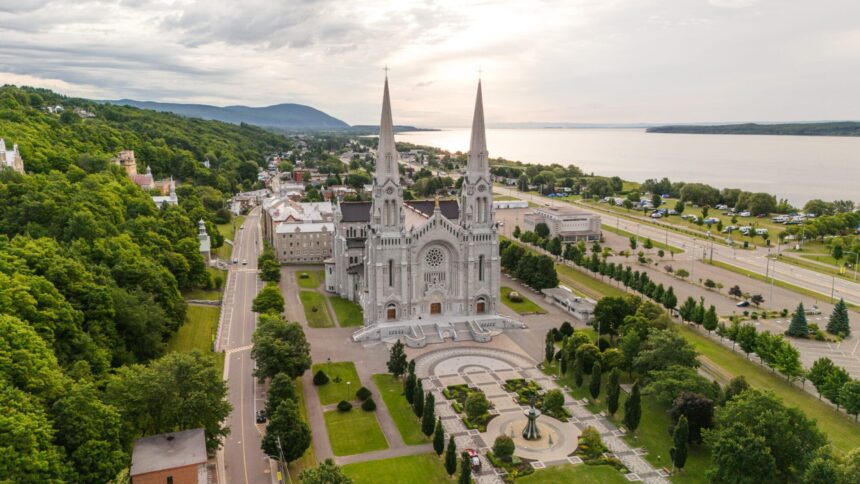
The Côte-de-Beaupré (the historic agricultural corridor running northeast along the St. Lawrence shore from the Chutes Montmorency to the Basilica of Sainte-Anne-de-Beaupré and beyond to the Mont-Sainte-Anne ski area) is the most historically continuous agricultural landscape in the greater Quebec City region, preserving the seigneurial strip-farm pattern of New France in a 40-kilometre corridor of heritage farmhouses, parish churches, and productive agricultural land that has been occupied and farmed with remarkable continuity since the 1630s. The Côte-de-Beaupré is simultaneously a heritage landscape of national significance and an active outdoor recreation corridor (the combination makes it the most complete single-day excursion from Quebec City available without crossing into another region.
The Seigneurial Landscape
The Côte-de-Beaupré’s seigneurial landscape) established by the grants of the 1630s-1640s, including Robert Giffard’s 1634 Seigneurie de Beauport and the subsequent grants along the shore (preserves the distinctive strip-farm geography (long, narrow lots perpendicular to the river) more completely than any other territory in Canada. The Route 138 (Boulevard Sainte-Anne), the main corridor through the Côte, passes continuous heritage farmhouses from Beauport through Château-Richer, Sainte-Anne-de-Beaupré, and Beaupré) many in active use as farms, some converted to restaurants, artisan boutiques, or bed-and-breakfast accommodation. The Maison Drouin (1730), the Moulin du Petit-Pré (1695, the oldest operating mill in Canada), and the Manoir Lacombe are among the most significant heritage properties accessible along the route.
Basilique de Sainte-Anne-de-Beaupré
The Basilique de Sainte-Anne-de-Beaupré (located 35 kilometres northeast of Quebec City in the town of Sainte-Anne-de-Beaupré) is the most visited Catholic pilgrimage site in Canada and one of the most significant in North America, receiving approximately one million pilgrims and visitors annually. The current basilica (completed 1934, replacing earlier structures on the same site dating to 1658) is a large Gothic Revival structure whose twin spires are visible across the St. Lawrence for many kilometres. The basilica’s history of reported miraculous cures (beginning in the 17th century with the curing of a man named Louis Guimont) has sustained its pilgrimage function for over 350 years. The crutches and braces left by pilgrims who credited the shrine with their healing line the interior walls in a remarkable display of votive faith.
Cycling the Côte
The Côte-de-Beaupré cycling corridor (the Route Verte network that follows the shoreline from Beauport through to Sainte-Anne-de-Beaupré) provides the finest extended cycling experience accessible from Quebec City on flat, heritage-landscape terrain. The 35-kilometre ride from the Beauport/Limoilou boundary to Sainte-Anne-de-Beaupré passes the Chutes Montmorency, the heritage farmhouses of Château-Richer, and the Basilique, with the St. Lawrence River visible on the right throughout the journey and the Laurentian foothills rising on the left. Return by cycling (70 km round trip, suitable for fit recreational cyclists) or by the occasional bus service on Route 138 (check Réseau de transport de la Capitale schedules for the Beauport-Beaupré corridor).