Most of what gets written about winter in Québec City focuses on the Carnaval de Québec in February. Fair enough — it’s the world’s biggest winter festival and it’s genuinely extraordinary. But if you’re planning a winter trip to Québec and the Carnival dates don’t work for you, you might walk away thinking you’ve missed the real thing.
You haven’t. Winter in Québec City is a five-month season, roughly mid-November through mid-April, and the Carnival is just 17 days of it. The other four and a half months contain enough good winter activities to fill multiple trips. Here’s the honest, comprehensive rundown.
The Urban Winter: What’s Great Inside the City Limits
Skating at Place D’Youville
The outdoor skating rink at Place D’Youville, just outside the Saint-Jean Gate of the old city walls, is one of the most atmospheric free urban skating experiences in Canada. You’re literally skating in the shadow of 17th-century city walls, with the Parliament buildings visible across the way. Skate rentals are available on-site at reasonable rates, and the rink is open from roughly early December through early March, weather permitting.
The rink operates on a drop-in basis — no reservations, no tickets. Go in the late afternoon as the light fades and the rink fills with locals leaving work. It’s one of the most distinctively Québécois urban winter experiences available.
The Dufferin Terrace Toboggan Slide
Every winter, the city installs a historic wooden toboggan slide on the Dufferin Terrace in front of the Château Frontenac. It’s been a tradition since 1884 — with a few interruptions — and the current configuration features three parallel lanes that launch sleds across the ice-coated wood and down a 70-metre run.
You pay a small fee (around $4), climb the stairs, grab a wooden toboggan, and ride down at startling speeds. Kids love it. So do adults, if they can shed a certain amount of dignity. Open from roughly mid-December through early March.
Walking the Plains of Abraham in Snow
The Plains of Abraham — the 98-hectare urban park that’s the site of the 1759 battle for Québec — transforms in winter into the largest cross-country ski and snowshoe venue in downtown Québec City. Groomed trails, equipment rentals at the visitor centre, and a network that lets you ski or snowshoe for a full afternoon without ever leaving the urban core.
Even without skis, simply walking the Plains in fresh snow is one of the better things you can do in Québec in winter. The views out over the St. Lawrence River toward Lévis, with the river partially frozen and the Laurentian foothills white in the distance, are genuinely memorable.
Winter Architecture Walks in Old Québec
Old Québec in winter — especially early morning, before the streets have been cleared — is simply one of the most photogenic urban landscapes in North America. The stone walls, the narrow streets, the spires of Notre-Dame Cathedral, all under fresh snow and lit by the amber glow of the old gas-style street lamps, deliver postcard-perfect scenes at every corner.
The best walk: start at the Place Royale, wind up through Petit-Champlain, take the funicular to the Upper Town, then walk Rue Saint-Jean west toward the Saint-Jean Gate. About an hour if you’re taking photos. Do it before 9 AM for the most atmospheric experience.
The Day Trips: Snow Country Within an Hour
Hôtel de Glace (Ice Hotel)
About 20 minutes north of Québec City, the Hôtel de Glace is a fully functional hotel built entirely from ice and snow, open each winter from roughly early January through late March. Even if you’re not staying overnight (which is an acquired taste — the rooms are kept at -3°C), day visits let you tour the elaborate ice-sculpted suites, the ice chapel, the ice bar (yes, you can have a cocktail served in an ice glass), and the various public spaces.
Day passes run around $25-30. Stays start at roughly $250+ per couple per night and include all necessary cold-weather gear. Book well ahead for overnights.
Montmorency Falls in Winter
The Chute Montmorency — a waterfall 83 metres tall (taller than Niagara) — is always impressive, but winter does something extraordinary to it. The spray from the falls freezes as it accumulates at the base, creating a massive cone of ice known as the pain de sucre (sugar loaf). In good winters, the cone grows 30+ metres high.
Visitors can approach the base of the falls via a boardwalk, climb the adjacent cliff stairs, and even try ice climbing lessons on the frozen ice wall if you’re the type for that. The cable car runs year-round. The site is 15 minutes from downtown Québec.
Canyon Sainte-Anne in Winter
A 45-minute drive east of Québec City, this lesser-known natural site becomes even more dramatic in winter. Suspended bridges cross a 74-metre-deep canyon where an ice-lined river carves through ancient rock. Snowshoe trails follow the canyon rim. The winter ice formations inside the canyon are genuinely spectacular, and it’s uncrowded compared to Montmorency.
Mont-Sainte-Anne and Stoneham Ski Areas
Two significant ski resorts are within 45 minutes of Québec City. Mont-Sainte-Anne (about 40 minutes east) is larger, with more vertical drop and a more varied terrain — it’s considered one of the best ski mountains in Eastern Canada. Stoneham (about 30 minutes north) is smaller and known for excellent grooming and beginner-to-intermediate terrain, plus a lively après-ski scene.
Both accept day-trippers from Québec City. Lift tickets at either run $85-110 per day depending on season. Equipment rentals available on-site. Night skiing is available at both resorts.
Indoor Winter Essentials
Nordic Spas: Siberia Spa and Strøm Spa Vieux-Québec
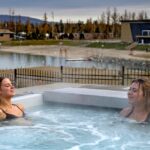
The Québec winter has produced one of the finest Nordic spa cultures in North America, and Québec City has two of the best examples. Siberia Spa (in Lac-Beauport, 20 minutes from downtown) features outdoor thermal baths, a frigid Nordic river plunge, wood-fired saunas, and a relaxation centre — the full Scandinavian hot-cold-rest cycle in a forest setting. Strøm Spa Vieux-Québec (central, on Boulevard Champlain) offers a similar experience with Old City and river views from its outdoor pools.
Both are year-round but at their peak in winter, when the thermal contrast between the 38°C pools and the outside air is at its most therapeutic. Day passes run $80-110 depending on the spa and time. Book ahead.
The Musée de la Civilisation
One of Canada’s best museums, and genuinely excellent in winter when you want an indoor activity with real substance. The permanent Québec history exhibition and the rotating special exhibits both tend to be ambitious. Budget 2-3 hours for a visit.
Le Diamant Theatre and Le Capitole
Québec City has an active theatre scene that peaks in winter. Le Diamant (Robert Lepage’s theatre) and Le Capitole (large-venue performances) both offer excellent winter programming, ranging from French-language productions with surtitles to musical reviews and touring shows. Check their calendars for what’s running during your dates.
What to Eat and Drink in Winter
Winter cuisine is where Québec really shines:
- Fondue or raclette at one of the Upper Town’s classic restaurants. Le Saint-Amour and Aux Anciens Canadiens both do it well.
- Sugar shack (cabane à sucre) — traditional Québec meals featuring maple in everything. Several operators are within 30 minutes of the city. March is peak season when the maple sap is running.
- Tourtière — the classic Québec meat pie, served everywhere from family restaurants to formal establishments.
- Caribou — the hot spiced wine drink served throughout Carnival but available at many bars throughout winter.
- Ice cider (cidre de glace) — a Québec specialty made from apples pressed in winter, closer to dessert wine than conventional cider. Tastings available at several Île d’Orléans producers.
Winter Gear: What You Actually Need
If you’re visiting from somewhere temperate, get serious about your gear. Québec winter doesn’t negotiate. The essentials:
- A real parka, not a city-weight jacket. Temperatures regularly drop below -15°C with wind chills into the -25s.
- Insulated waterproof boots with actual grip. Cobblestones + ice + smooth soles = medical incidents.
- Thermal base layers, a mid-layer (fleece or wool), and outer shells. Layering works. Single-heavy-layer rarely does.
- Mittens rather than gloves. Warmer, especially when standing still outdoors.
- Hat with ear coverage and a scarf or buff.
- Hand and toe warmers — those disposable packets from outdoor stores. Invaluable for parade-watching or extended walks.
If you arrive underprepared, Québec City has excellent outdoor outfitters. Simons and La Cordée on the Grande Allée can sort you out quickly.
When to Come: The Underrated Seasons
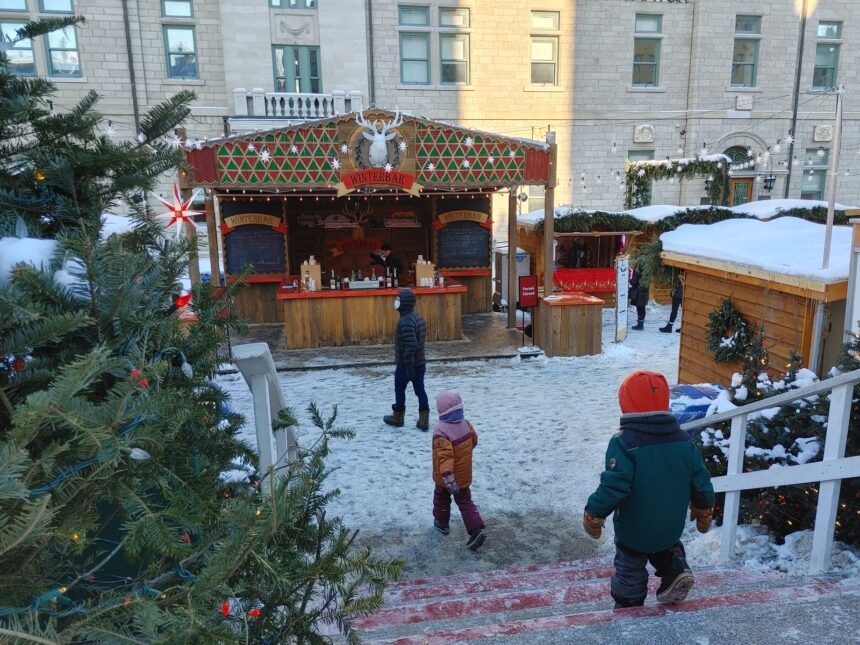
Early December through the first week of January is the Christmas season in Québec City, and it’s genuinely magical. The Old City is decorated, the Christmas market (Marché de Noël allemand) runs at Place D’Youville, and there’s a lower-key energy that Carnival doesn’t have.
Mid-January to mid-February, outside the Carnival dates, is the deep winter — coldest temperatures, most reliable snow, fewest tourists. If you want the “pure” Québec winter experience without the festival crowds, this is the window.
March is the sugar shack season. Warmer days (highs of -5°C to +5°C), still-reliable snow, and all the maple traditions are in full swing. Many Québec residents consider March the best winter month.
Winter is only part of the year here, and the programming does not stop when the snow goes. Our guide to Québec City festivals covers what runs in the other seasons.
FAQ
Is Québec City manageable in winter without a car?
Yes, for downtown activities. For day trips (Montmorency, ski resorts, sugar shacks, Île d’Orléans), a car or tour bus is much more practical.
What about the risk of extreme weather?
Winter storms happen. Have flexibility in your schedule and a Plan B (indoor activities) ready. Airlines sometimes delay arrivals and departures in serious storms — build in buffer if you can.
Is Québec winter too cold for kids?
No, if they’re dressed properly. Québec parents dress their kids for winter every day from November through April. Your kids can do it too.
What’s the best single winter week to visit?
Hard to pick just one, but the first week of December (Christmas atmosphere, not yet full tourism) or the first week of March (sugar shacks, still snowy) are both excellent.
Final Word
Winter in Québec City isn’t a hardship you endure — it’s the season the city was designed for. The architecture looks better in snow. The food tradition makes sense when it’s minus-twenty outside. The rhythm of social life (hot drinks, indoor gatherings, seasonal festivals) revolves around it. Come prepared, dress warm, and plan beyond the Carnival dates if you have flexibility. You’ll find a version of Québec that most summer tourists never experience.