Québec City’s population sits just under 550,000 — smaller than Tucson, smaller than Baltimore — and yet the city sustains an arts scene that punches far above its demographic weight. A national museum holding one of the most important Canadian collections anywhere, a civilization museum that genuinely rethinks how history gets told, an independent gallery scene scattered across Saint-Roch and Limoilou, and a summer festival calendar that stretches from July’s Festival d’été to August’s fireworks over the St. Lawrence. None of this happened by accident.
This isn’t a ranked list. It’s a working map of how the arts scene actually fits together — what to see if you have one day, what to dig into if you have a week, and which corners stay out of the guidebooks on purpose.
The Big Three Institutional Anchors
If you’re here for a short visit and want one cultural day that represents the scene at its most ambitious, these are the three institutions to build around.
Musée national des beaux-arts du Québec (MNBAQ)
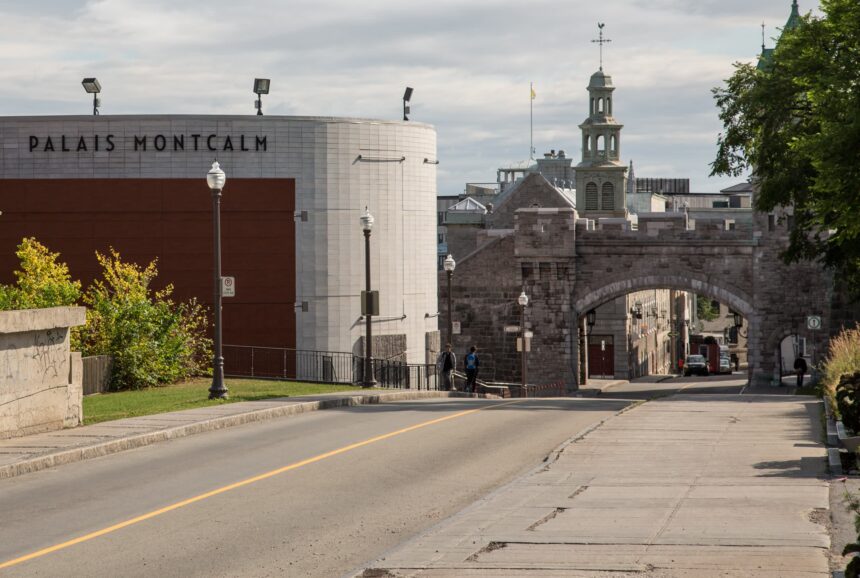
Built across four pavilions at the edge of the Plains of Abraham, the MNBAQ holds the most important collection of Québec art in existence. The Pierre Lassonde Pavilion (opened 2016, designed by OMA with Provencher Roy) is itself a piece of architecture worth the trip. The permanent collection tracks Québec art from the 17th century to contemporary practice, with particularly deep holdings of Jean-Paul Riopelle, Jean-Paul Lemieux, and the Inuit art collection donated by Raymond Brousseau. Temporary exhibitions are ambitious and often international.
Musée de la civilisation
In Vieux-Port, the Musée de la civilisation is the institution most likely to change how a first-time visitor thinks about Québec. It’s not a traditional museum — no timelines of dead kings, no dioramas of pioneers. Exhibitions are thematic, often interactive, and frequently uncomfortable in productive ways. The permanent exhibition on the First Nations and Inuit peoples of Québec is among the best of its kind in Canada.
Musée des plaines d’Abraham
Smaller, more focused, and free for the essential outdoor portion. The interpretation centre inside the Plains explains the 1759 battle that changed the course of North American history — a site that still generates debate about how it should be remembered. Worth pairing with a walk across the Plains themselves.
The Independent Gallery Scene
Once you’re done with institutions, this is where the scene gets interesting. The commercial gallery world in Québec City has always been small, but a cluster of artist-run centres and independent spaces keeps contemporary practice alive.
- VU Photo — Artist-run centre dedicated to contemporary photography. Exhibitions rotate frequently and lean toward experimental, often politically engaged work.
- L’Œil de Poisson — Multidisciplinary artist-run space in Saint-Roch. Installation, performance, video, things that don’t fit neatly in white-wall galleries.
- Galerie Lacerte — Longstanding commercial gallery representing established Québec painters. A window into what the collecting class here actually buys.
- Engramme — Print-focused artist-run centre. Beautiful editions, workshops, and a surprisingly international roster.
- La Chambre Blanche — Residency-based centre that hosts artists from around the world. Exhibitions are unpredictable by design.
Most of these are free or very low cost. Openings tend to happen on Thursday or Friday evenings, and they’re social — if you want to actually meet the people making the work, that’s when to go.
The Festival Calendar
Québec City’s festival schedule is dense enough that planning your visit around one is a legitimate strategy. The essentials, roughly in calendar order:
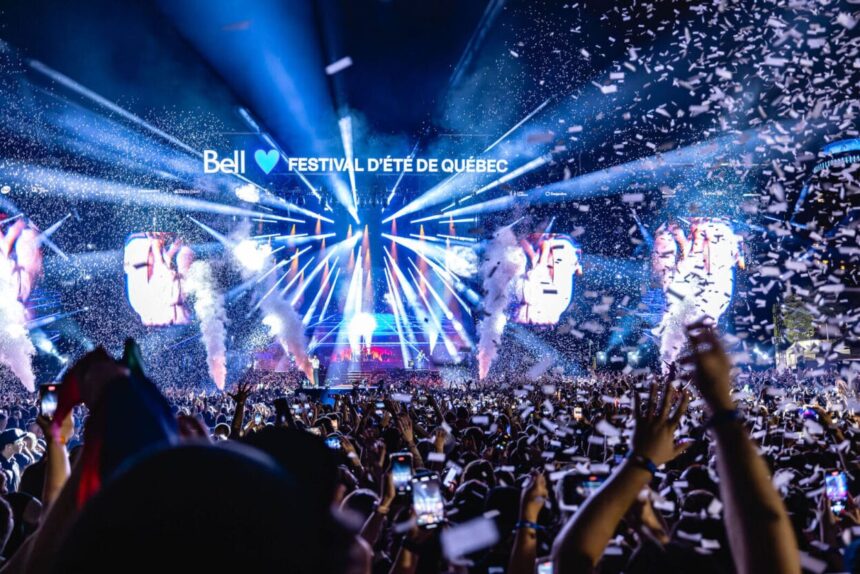
- Festival d’été de Québec (FEQ), July — Eleven days of music on the Plains of Abraham and stages throughout the city. A single pass costs less than one ticket to the same headliners in a US arena.
- Les Grands Feux Loto-Québec, late July / early August — Fireworks competitions at Montmorency Falls. Best viewed from the waterfront.
- Festibière, August — Beer festival on the Plains. Québec’s craft brewery scene is enormous and this is a useful crash course.
- Festival international du film de Québec (FCVQ) — Independent film in early fall.
- Québec City Film Festival and Québec en toutes lettres — Literature and film events scattered through autumn.
- Carnaval de Québec, late January / early February — The winter festival that put the city on the international tourism map. Bonhomme, ice canoe races, night parades.
- Manif d’art — Contemporary art biennial alternating years. When it’s on, the city transforms into a distributed exhibition.
Music, Theatre, and Performance
The Grand Théâtre de Québec is the main performance venue — home to the Orchestre symphonique de Québec, Opéra de Québec, and a rotating program of theatre and dance. The building itself (designed by Victor Prus, opened 1971) is a brutalist landmark that divides opinion but hosts consistently strong programming.
For theatre in French, Théâtre du Trident and Théâtre Périscope are the two houses that matter most. English-language theatre is scarce but does surface occasionally at the Morrin Centre, the old prison turned cultural space in Old Québec that serves the city’s small anglophone community.
Live music in intimate venues is where Québec City punches hardest. Petit Impérial, Le Pantoum, Le Cercle in Saint-Roch — these are the rooms where you can see a serious songwriter or a jazz trio for the price of a movie ticket.
Public Art and Street-Level Culture
Walk Saint-Roch and Saint-Jean-Baptiste with your eyes up. Québec City has an active mural scene, and the murals tend to be serious rather than Instagram-bait. The large trompe-l’œil facades in Vieux-Québec are technically impressive but commercially driven; the more interesting work is in the neighbourhoods north of the old walls.
The Plains of Abraham is dotted with public sculpture. The Observatoire de la Capitale and the Tour Martello No. 1 both offer quiet art/history crossover experiences. And the city’s public libraries — especially the Bibliothèque Gabrielle-Roy in Saint-Roch — are cultural spaces in their own right, hosting readings, launches, and exhibitions.
What People Miss
Two things get overlooked consistently. First, the Monastère des Augustines has a small museum inside that tells the story of the nursing sisters who arrived in 1639 — a genuinely moving institution with artefacts that exist nowhere else. Second, Maison Chevalier and the Séminaire de Québec’s museum wing hold historic collections that most visitors never enter because they’re not marketed aggressively. If you like material culture and old silverware, go.
How to Plan a Real Arts Day
If you only have one day and you want it to count: morning at MNBAQ, lunch somewhere on Grande Allée, afternoon at Musée de la civilisation, early evening walking the galleries of Saint-Roch, dinner there. That’s a serious cultural day anywhere in Canada, and it costs less than a single museum admission in New York.
If you have three days, add the Plains museum, a live concert somewhere small, and time for one of the artist-run spaces. If you have a week, you’re into festival territory — and that’s when the city stops being a destination and starts feeling like a place you could actually live in.
FAQ
What’s the single best museum in Québec City?
It depends on what you’re after. MNBAQ for visual art, Musée de la civilisation for ideas and history, Plains museum for the founding battle. If you can only do one, most people pick MNBAQ.
Do I need French to enjoy the arts scene?
For museums, festivals, and visual art, no — everything is bilingual or visual. For theatre and certain literary events, yes, you’ll want functional French. Music and dance translate universally.
When is the best time of year for culture?
July is peak festival season. September and October combine film, literature, and indoor art with good weather. February is Carnaval plus indoor cultural institutions at their least crowded. Our year-round festival calendar takes the whole year month by month.
Are there contemporary art spaces beyond the big museums?
Yes — artist-run centres like VU Photo, L’Œil de Poisson, Engramme, and La Chambre Blanche are the backbone of the contemporary scene, mostly concentrated in Saint-Roch.