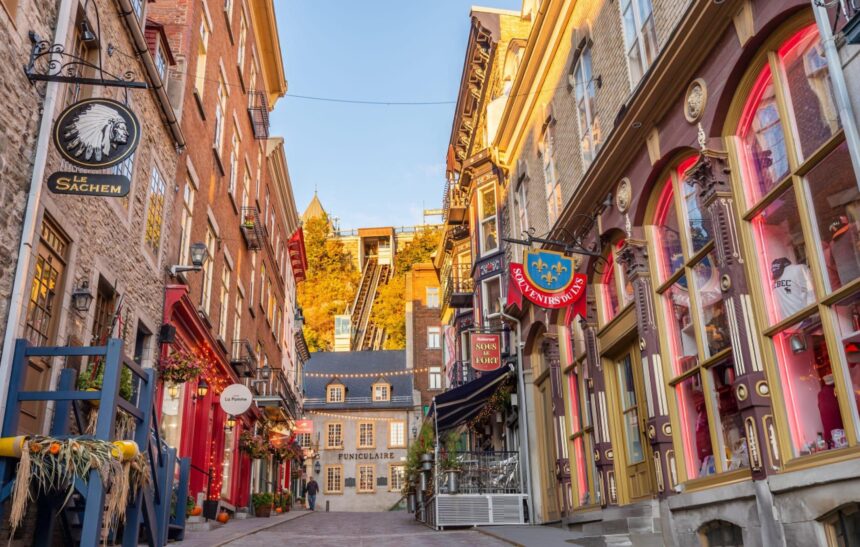
Statistics Canada’s Crime Severity Index places Québec City consistently in the lowest third of major Canadian metropolitan areas. The 2023 index gave the agglomeration a score of 52.3, well below the national average of 78.1 and considerably below Montréal’s 80.2 or Vancouver’s 95.4. The city’s violent-crime index is the lowest among Canadian metros with populations above 500,000 residents, and has held that position for more than a decade. These numbers provide context for a reality visitors typically experience: Québec City is a safe place to walk in nearly every district at nearly every hour.
Where the data holds up
The statistical pattern matches the street pattern. Vieux-Québec, the Petit-Champlain, the Grande Allée, Saint-Jean-Baptiste, Saint-Roch, Montcalm, Sillery, Sainte-Foy: all rank among the safer neighbourhoods in any Canadian city of comparable size. Solo walkers, including women walking alone late at night, report few incidents. The city maintains street lighting at a higher standard than most North American urban peers. Police presence is visible but not oppressive. Most visitors who follow basic urban common sense will spend a week here without cause for concern.
Situational advisories that apply
A handful of caveats deserve mention. First, the intra-muros section of Rue Saint-Louis attracts a concentration of intoxicated tourists on summer Friday and Saturday nights; petty pickpocketing increases accordingly. Second, the Carnaval weeks in early February bring a seasonal spike in minor incidents clustered around Grande Allée’s outdoor bars. Third, the area immediately surrounding the downtown bus terminal on Boulevard Charest has a low-level issue with aggressive panhandling and occasional drug activity. None of these situations constitutes a meaningful threat to personal safety. All of them reward ordinary caution: keep wallets front-pocketed, avoid empty side streets if intoxicated, and keep belongings visible in busy restaurants.
Winter safety concerns
The most realistic hazard in Québec City is not crime but ice. Sidewalks freeze overnight between November and April, and the downtown sidewalks in particular are treated with salt rather than sand. The combination produces a glossy film that contributes to roughly 2,000 reported slip-and-fall injuries each winter, according to the Institut national de santé publique. Footwear matters: proper winter boots with serious tread reduce the risk substantially. Ice-cleat attachments, sold at any pharmacy or sports retailer for around 15 dollars, transform the experience for visitors unaccustomed to Canadian winter surfaces. Falling below freezing, outdoor temperatures also carry a genuine risk for inadequately dressed visitors; hypothermia hospitalisations spike during the Carnaval weeks.
Transportation safety
Rental cars in winter face the same hazards as pedestrians. Snow tires are legally required between December 1 and March 15, and rental agencies generally include them without additional surcharge. Bridges to and from the south shore ice over before other roads, particularly the Pont Pierre-Laporte during freezing-rain events. RTC public transit operates reliably through most winter conditions, with delays during major storms but rarely full suspensions. Taxis and ridesharing via Uber and the local Eva cooperative remain available at all hours, and the taxi stands at Place d’Armes and outside major hotels maintain consistent coverage. Cycling is generally safe throughout the summer thanks to the Route verte network and the expanding dedicated bike lanes, though the old city’s stone pavers and steep grades still demand experienced riders.
Emergency contacts
Canada-wide emergency dispatch uses 911 and connects the caller to bilingual operators within seconds. Non-urgent police calls go to 418-641-2447. The Info-Santé medical triage line is 811. The CHU de Québec-Université Laval operates the primary emergency department at the Hôtel-Dieu site on Rue Saint-Olivier, open twenty-four hours with bilingual triage staffing. Pharmacies in the city keep at least one branch open twenty-four hours a day year-round, with the Jean Coutu on Chemin Sainte-Foy in Montcalm the most commonly consulted. For most visitors, the only emergency infrastructure they will end up needing is the contact information for their travel insurance. The city rewards that particular form of preparation by rarely requiring its activation.