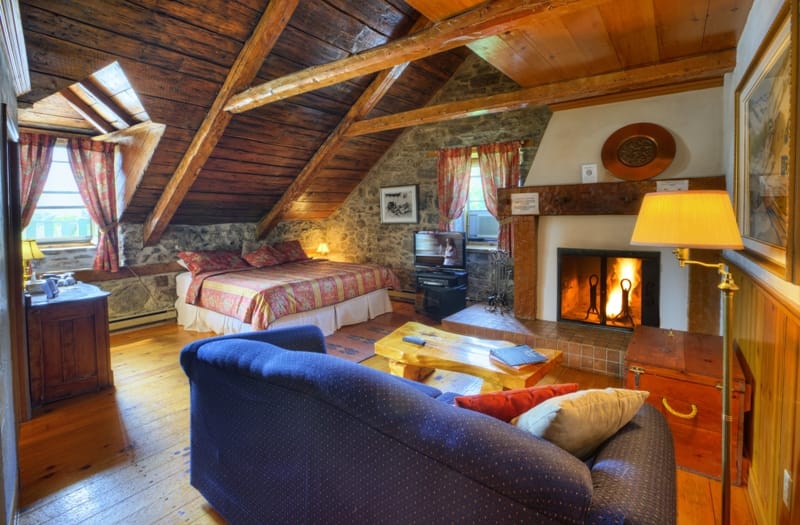
“Where should I stay in Québec City?” is the single most common question travellers ask before they arrive. The automatic answer — Vieux-Québec, obviously — isn’t wrong, but it’s incomplete. The city has four meaningfully different neighbourhoods for visitors, and picking the right one depends less on prestige than on how you actually plan to spend your time.
Here’s the honest geography, with the trade-offs each area actually delivers.
Vieux-Québec (Old Québec): The Default, For Good Reason
The walled historic core. First-time visitors almost always stay here, and in most cases they’re right to. Everything iconic — Château Frontenac, Place Royale, Petit-Champlain, the fortifications, the boardwalk — is a short walk away.
Who it’s for: first-time visitors, people staying three nights or fewer, anyone for whom “walking distance to Château Frontenac” is the organizing principle of the trip.
What you pay for: proximity, the architecture itself, and the fact that you can stumble out of your hotel directly into the postcard.
Trade-offs: highest prices in the city, tourist crowds, restaurants that lean toward tourist-facing rather than local — our honest shortlist of the restaurants inside the walls sorts the ones worth it from the rest — fewer grocery stores or day-to-day amenities. In summer, the streets nearest Château Frontenac are genuinely congested.
Within Vieux-Québec, the geography matters. Upper Town (Haute-Ville) is on the plateau around Château Frontenac — dense, dramatic, loud in peak season. Lower Town (Basse-Ville) around Place Royale is quieter, with better restaurants and the real historical centre. Both are walkable to each other in 10 minutes via stairs or the funicular.
Saint-Roch: Where Locals Actually Live and Eat
North of the walls, Saint-Roch is the neighbourhood that transformed Québec City’s contemporary reputation. In the 1990s it was largely derelict; today it’s the most interesting restaurant and creative-industry corridor in the city. Rue Saint-Joseph is the spine. The Bibliothèque Gabrielle-Roy, the Musée de la civilisation‘s annex buildings, and half the best restaurants in Québec are here.
Who it’s for: repeat visitors, people staying a week or more, food-focused travellers, anyone who wants a neighbourhood experience rather than a tourist-zone experience.
What you get: better restaurants at lower prices, a more authentic sense of how Québec City actually functions, cheaper accommodation (B&Bs and boutique hotels at 20-30% less than equivalent quality in Vieux-Québec).
Trade-offs: a 15-20 minute walk (or short bus ride) to Vieux-Québec. In winter that walk involves significant elevation change and can be slippery. If every moment of your trip needs to happen inside the walls, this isn’t the base.
Saint-Jean-Baptiste: The Middle Ground
Between Vieux-Québec and Saint-Roch, clustered along rue Saint-Jean outside the walls. A residential neighbourhood that’s walkable to both the historic core and the Saint-Roch restaurant scene, with the best grocery stores and cafés in the central city.
Who it’s for: travellers who want to be central without paying Vieux-Québec prices, longer stays, anyone planning to cook occasionally or live like a local for a week.
Trade-offs: fewer dramatic views, less obvious “you’re in Québec City” atmosphere than the walled core. Most visitors find this a feature, not a bug, after night one.
Sainte-Foy: Convenience Over Character
The western borough, about 15-20 minutes by car from Vieux-Québec. Home to Université Laval, the Aquarium du Québec, most of the city’s shopping malls, and a dense cluster of business-oriented chain hotels.
Who it’s for: business travellers, families prioritizing parking and kid-friendly amenities, visitors with a car who don’t mind driving into the historic centre, anyone attending an event at Université Laval or the Pépin convention facility.
What you pay for: lower prices, easier parking, newer rooms, pool and gym.
Trade-offs: no walkable access to historic Québec. You will drive or take a bus every day. Character is limited.
Lévis: The Contrarian Option
Across the St. Lawrence from Vieux-Québec. A separate city with its own historic downtown (Vieux-Lévis), connected to Québec by a 12-minute ferry that runs all year.
Who it’s for: travellers who love water crossings, photographers who want the view of Québec City (arguably better than most views from it), budget-conscious visitors willing to trade convenience for value.
What you get: the ferry ride itself is one of the best free experiences in the region — Château Frontenac looking like a fairy tale from the deck. Prices on the south shore are noticeably lower than anywhere in Québec City proper.
Trade-offs: every trip into the city adds 20-30 minutes each way. Ferry runs aren’t 24/7. Most travellers will not want to do this twice a day for a week.
The Decision Framework
A simple way to cut through the options:
- 3 nights or fewer, first visit: Vieux-Québec. Don’t overthink it.
- 4+ nights, or repeat visit: Saint-Roch or Saint-Jean-Baptiste. The city rewards neighbourhood living.
- Driving with kids: Sainte-Foy. Parking, pools, predictability.
- Tight budget, photography focus: Lévis. The ferry view is worth it.
- Special occasion, one-time splurge: Château Frontenac or one of the Vieux-Québec boutique hotels. No apology needed.
FAQ
Is staying in Vieux-Québec worth the premium?
For a short first visit, yes. For a longer stay or a repeat trip, the premium buys diminishing returns, and Saint-Roch or Saint-Jean-Baptiste deliver better day-to-day value.
Can I stay in Saint-Roch and still easily visit Old Québec?
Yes — it’s a 15-20 minute walk or a short bus ride. The main practical consideration is winter, when the elevation change from Saint-Roch up to Vieux-Québec can be slippery.
Do I need a car?
Not if you’re staying in Vieux-Québec, Saint-Roch, or Saint-Jean-Baptiste and sticking to city attractions. A car becomes useful if you want to do day trips (Île d’Orléans, Montmorency, Charlevoix) without relying on tours or transit.
Is the Lévis ferry reliable in winter?
Yes, it runs year-round, though with reduced frequency on evenings and Sundays. Ice conditions occasionally cause brief delays, but full closures are rare.